2649 matches
1 of 133

The innovation landscape is vast, and you can easily get lost in blockchain projects, virtual reality experiences and AI platforms. Choosing an innovation approach is an important part of your innovation strategy, it can guide you like a north star and makes it easier to stay on your innovation course. In this article we explain why we chose a human-centric approach at CampX.

“During Q1 2024, demand continued to normalize at good levels across many of the Volvo Group’s markets. Adjusted for currency, net sales were on the same level as in Q1 2023 and amounted to SEK 131.2 billion. Invoiced price continued to increase, mainly on the back of carry-over from the price increases we gradually implemented last year. Adjusted operating income amounted to SEK 18.2 billion (18.6), which corresponds to a margin of 13.8% (14.0). Return on capital employed improved to 37.7% (30.3). We continue to prioritize quality in the business,” says Martin Lundstedt, President and CEO.
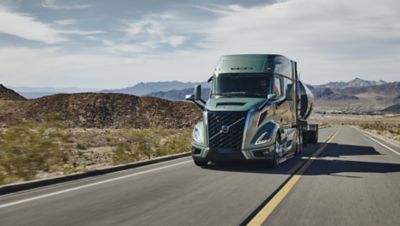
The Volvo Group today announced that it will build a new heavy-duty truck manufacturing plant in Mexico to supplement the Group’s U.S. production. The plant will provide additional capacity to support the growth plans of both Volvo Trucks and Mack Trucks in the U.S. and Canadian markets, and support Mack truck sales in Mexico and Latin America. The plant is expected to be operational in 2026.
The Volvo Group report for the first quarter 2024 will be published on April 17, at 7.20 a.m. CEST. There will be a conference call for press and analysts starting at 9.00 a.m. CEST.
The number of votes in AB Volvo has changed due to the conversion of a total of 1,490 Series A shares to a total of 1,490 Series B shares. The conversions were implemented with the support of the opportunity for Series A shareholders to request conversion of Series A shares to Series B shares which was entered in the Articles of Association at the 2011 Annual General Meeting.
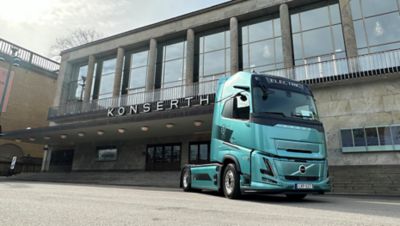
AB Volvo held its Annual General Meeting on March 27, 2024. The Meeting was held at Konserthuset in Göteborg, Sweden, with the option for shareholders to exercise their voting rights by advance voting (postal voting). Presentations by the Chairman of the Board and the President and CEO describing the work of the Board and the Volvo Group’s operations are available on AB Volvo’s website www.volvogroup.com.
Press release
2024-03-22

Following the binding joint venture agreements signed on October 6[th], 2023, Volvo Group and Renault Group have obtained all the required regulatory approvals and have now officially launched the new company Flexis SAS for the next generation fully electric and software defined vehicles.
The Volvo Group will hold a Capital Markets Day at Volvo Trucks’ operations in Dublin, Virginia, USA on November 14, 2024.
Press release
2024-03-11

The Volvo Group has signed an agreement according to the previously announced Letter of Intent with Westport Fuel Systems Inc to establish a joint venture to accelerate the commercialization and global adoption of Westport’s High Pressure Direct Injection (HPDI[TM]) fuel system technology for long-haul and off-road applications.

Volvo Group today published the Annual Report for 2023 on www.volvogroup.com.

Volvo Group Venture Capital AB has invested in Zacua Ventures Builders Fund I, L.P. - a global venture capital fund focused on early-stage technology for the construction industry.
AB Volvo (publ) (“Volvo”) gives notice to attend the Annual General Meeting at Konserthuset, Götaplatsen, Göteborg, Wednesday, March 27, 2024, at 3.00 p.m.

Press information from AB Volvo’s Election Committee
Press release
2024-02-01
Volvo completes acquisition of battery business from Proterra Inc. and Proterra Operating Company
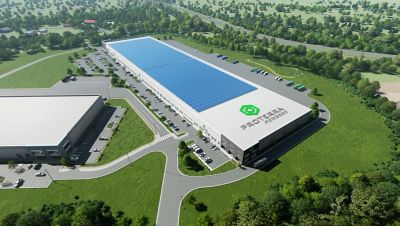
The Volvo Group has today completed the previously announced transaction whereby the Group acquired the battery business from Proterra Inc. and Proterra Operating Company Inc.
Press release
2024-01-31
Volvo launches new trucks worldwide – future proofing its product portfolio

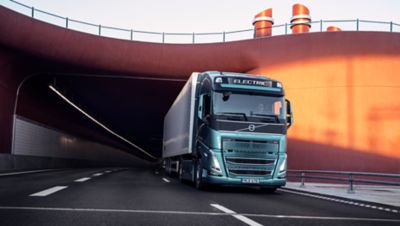
Volvo Trucks has unveiled an all-new heavy-duty truck platform for the North American market in parallel to a new heavy-duty truck range for Europe, Australia and markets in Asia and Africa. New energy efficient models – including trucks running on electricity and renewable fuels – will reduce CO2 emissions and take the company closer to the target of having a net-zero emission product range by year 2040.
“For the full year 2023, we increased net sales by almost SEK 80 billion to SEK 553 billion and the adjusted operating income to SEK 77.6 billion (50.5), with an adjusted operating margin of 14.0% (10.7). Return on capital employed in the Industrial Operations increased to 36.7% (27.4). We also generated a strong operating cash flow of SEK 45.8 billion (35.3) and ended the year with a net cash position of SEK 83.4 billion in the Industrial Operations, pension and lease liabilities excluded. Thanks to our strong finances, we can continue to provide a good return to our shareholders and at the same time invest in and seize opportunities in the ongoing industry transformation to more sustainable solutions. The Board of Directors proposes an ordinary dividend of SEK 7.50 per share and an extra dividend of SEK 10.50 per share,” says Martin Lundstedt, President and CEO.

Volvo Group has signed an option agreement with John Cockerill Defense which gives the Volvo Group the right to sell Arquus after mandatory consultations with staff representative bodies. The consultations are expected to be finalized in Q1 2024. As a result of the option agreement, the Volvo Group’s operating income will be negatively impacted by approximately SEK 900 M in the fourth quarter of 2023.
Press release
2024-01-12
Volvo Group accelerates hydrogen research with PhD scholarships for the internal combustion engine

Volvo Group is further developing the internal combustion engine with hydrogen as a propulsion technology by initiating PhD scholarships dedicated to hydrogen combustion engine technology. Two PhD students will be chosen to conduct their research at Chalmers University of Technology and at Lund University, Sweden, while being employed by the Volvo Group. Recruitment will start during the first quarter of 2024.
The Volvo Group report for the fourth quarter and full year 2023 will be published on January 26, 2024 at 7.20 a.m. CET.
Press release
2023-12-14
Volvo Construction Equipment reaches agreement to divest the ABG paver business

Volvo Construction Equipment (Volvo CE) and the Ammann Group have reached an agreement whereby Ammann will acquire Volvo CE’s global ABG paver business. As a result of the planned transaction, the Volvo Group’s operating income will be negatively impacted by approximately SEK 650 M in the fourth quarter of 2023.
2649 matches
1 of 133
460 matches
1 of 154
)
Embarking on a two-day journey of innovation and collaboration, the AI in Action Hackathon organized by Volvo Group Connected Solutions, a global organization that leads the development of the Volvo Group's connected services and solutions, proved to be a showcase of brilliance and creativity. This global development and training initiative brought together numerous talented minds, fostering an atmosphere of excitement and energy.
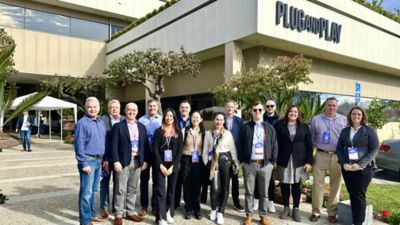
Highlighting Volvo Group's steadfast commitment to open and collaborative innovation, the Volvo Group Connected Solutions Innovation Lab, Silicon Valley recently hosted Volvo employees from around the globe to attend the Plug and Play Winter Summit. The Summit, which presents over 300 startups across 19 industry-focused innovation programs and hosts over 3,000 attendees, serves as a vibrant hub for learning from industry leaders, connecting with startups, and gaining valuable insights into cutting-edge technologies.
Story
2023-12-21 2 minutes 2 minutes
Seasonal gift 2023: Supporting STEM opportunities for youth in underprivileged areas
)
This year the Volvo Group Seasonal Gift – given on behalf of all employees to projects worldwide – focuses on 'Support STEM for youth in underprivileged areas'.
460 matches
1 of 154

Senior Vice President Media Relations,
Volvo Group Headquarters
Phone: +46 765 537229
E-mail: press@volvo.com

Senior Vice President Communications,
Volvo Group North America
Phone: +1 (336) 543-9094
Email: john.mies@volvo.com
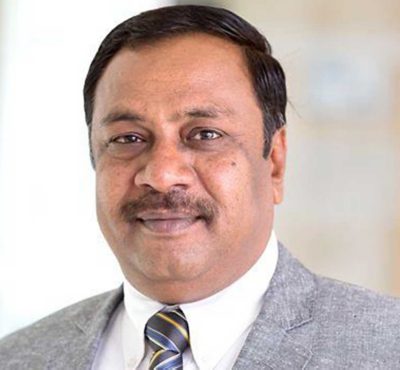
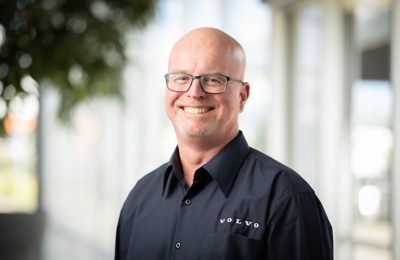
Public Relation and Media Manager,
Volvo Group Australia
Phone: +61 436 681 117
Email: matthew.wood@volvo.com